
crawls.in
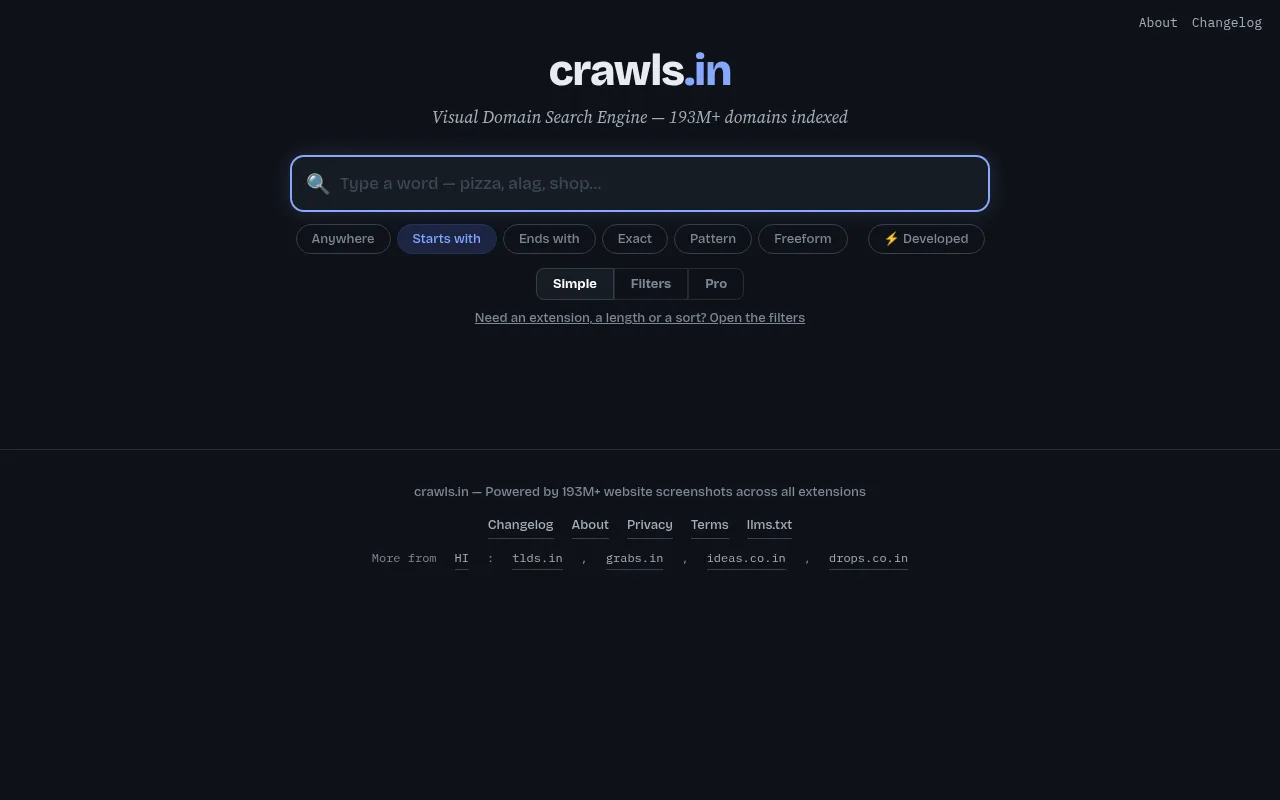
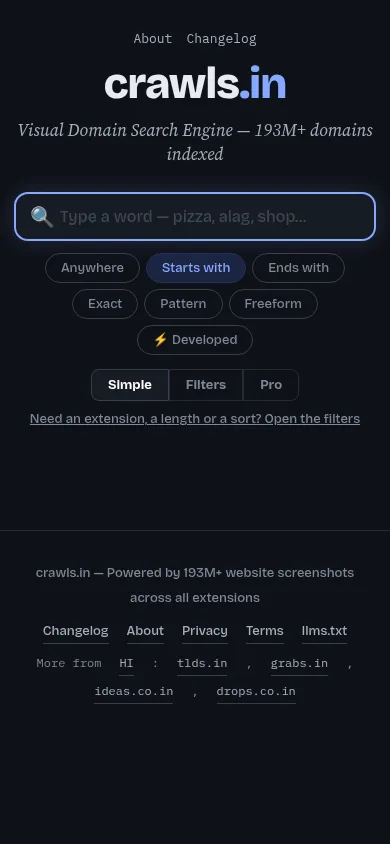
Search engine, by pictures. Type a word and see every registered domain that carries it, as screenshots of the sites themselves, across every extension.
- What it is
- A visual search engine for domain names
- The work
- Search engine, screenshot pipeline, a Go web service, the family design
- Built with
- Go, PostgreSQL, our own screenshot pipeline, Cloudflare in front
- Data from
- Zone files, certificate transparency logs, DNS scans and our own crawler
- Live since
- 2026
- Visit
- crawls.in
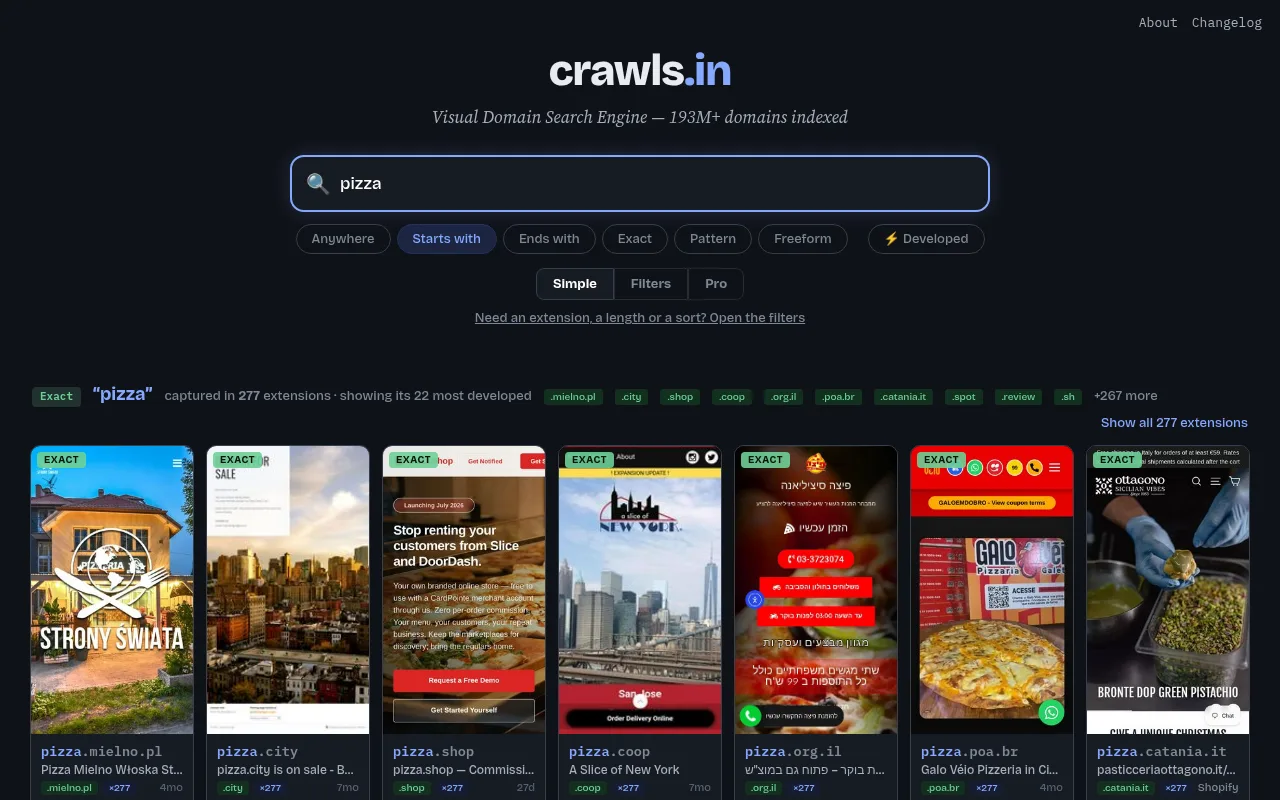
Most domain search tools answer one question: is this exact name free? crawls.in answers a different one. Type a word and it shows you every registered name that starts with it, ends with it, contains it or matches it exactly, and it shows them as pictures: a screenshot of what each site actually looks like today, ranked by how many extensions the name is registered in.
That one change, pictures instead of rows, turns a lookup into a view of a namespace. A brand team sees how crowded a word is and what the neighbours have built. A domain investor sees which extensions of a word are developed and which are parked. A researcher sees who builds on a word, in which country, on which platform.
The work
Two halves. The first is the index: every registered domain name we have seen, gathered from zone files, certificate transparency logs, DNS scans and our own crawler, keyed in a way that makes “starts with”, “ends with”, “anywhere” and pattern searches fast. The second is the pictures: a screenshot pipeline that renders new names within the hour and keeps the capture beside the record, so a result is a thumbnail, not a promise.
The search itself has modes and operators for people who want them (tld:, len:, ext:>5, entropy:>6 for “developed only”, pattern shapes like cvcv.in) and a plain box for everyone else. The same search is a JSON API with no key and no account.
How it is built
A single Go service renders the pages and answers the API, with PostgreSQL behind it and the screenshot store beside it. It is the same service that serves tlds.in, so one deploy carries both. Cloudflare sits in front for caching and the certificate.
In October it joined our data-tools design family: one masthead grammar, one blue for the live thing, mono labels in sentence case, cards that rise once as results arrive and otherwise stay still.