
reale.in
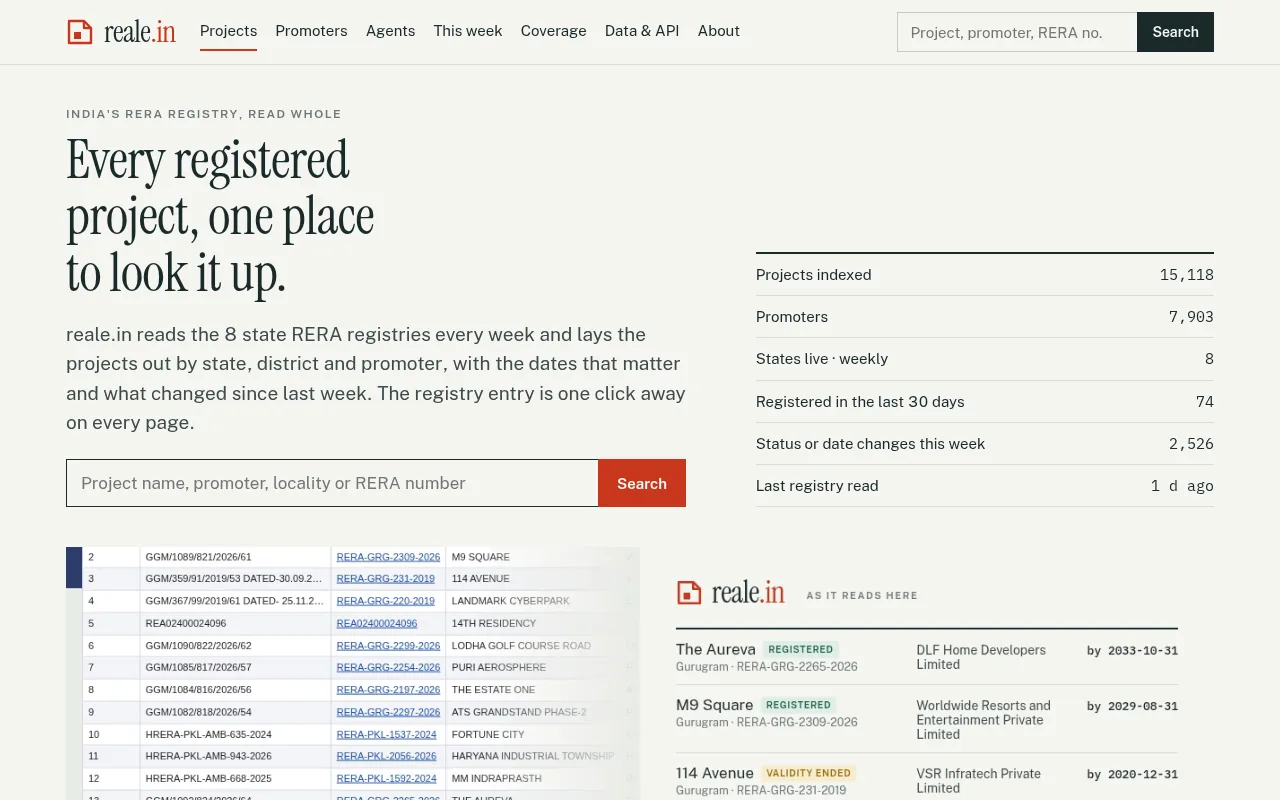
India’s RERA registry, read whole. Every real estate project registered with a state regulator, in one place, with what changed since last week.
- What it is
- A weekly reading of the state RERA registries
- The work
- Reading thirty differently built portals into one set of columns, keeping history, building the views the portals lack
- Built with
- PostgreSQL, a server-rendered site, a weekly reader per state
- Data from
- The state Real Estate Regulatory Authority portals
- Live since
- October 2026
- Visit
- reale.in
Since 2017 every real estate project of any size in India has had to be registered with its state’s regulator before it can be sold, and the registration is public: the promoter, the land, the approvals, the number of units, the promised completion date, every quarter’s progress. It is the best record of Indian real estate that exists, and it is scattered across more than thirty portals, each built differently, most searchable only one project at a time.
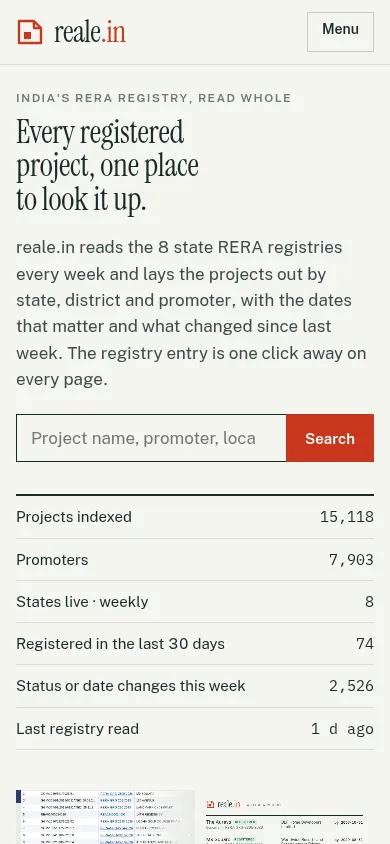
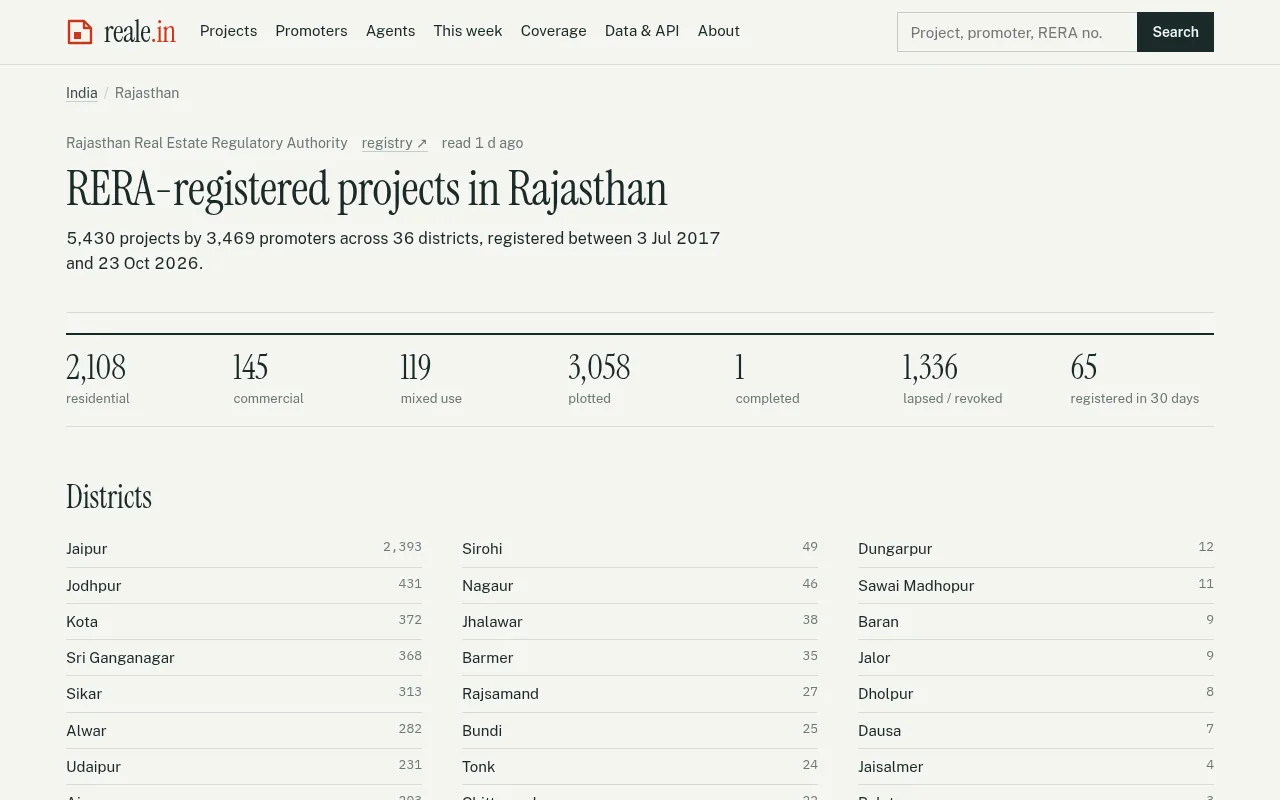
reale.in reads them for you. Each state registry is read weekly and normalised into one set of columns; every read is compared with the last, so a status flip, a completion date pushed out or a renamed promoter is recorded against the project and listed on this week’s changes; and the views the portals lack are built: by district, by promoter with their full record, by status, by year, and one search across every state. The registry entry is one click away on every page.
The work
Thirty portals means thirty readers, each written for a site that was never meant to be read by a program, each run on a schedule and checked for drift. The history is the product: nobody else shows what changed, and that is the question a buyer or a lender actually has.
How it is built
A database that keeps every read, and a server-rendered site over it with per-state coverage pages that say when each registry was last read. It is the one register of ours that earns its database, because the history cannot be a static file.